
The Active Problem-Solver: Garrett Stern’s Evolving Working Education
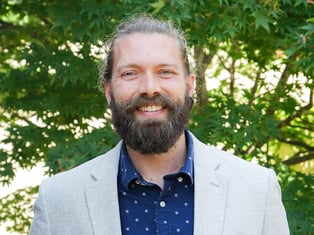 Meet Garrett Stern, the Center for Innovative Leadership’s (CIL) Executive Director. Garrett’s humble work ethic and purposeful focus on community drives the mission of the CIL.
Born and raised in Roanoke, Virginia, Garrett entered the workforce early, eager to escape the routine of school. He held various positions, including a soccer referee, lifeguard and retail associate, where he mastered the art of folding t-shirts perfectly. In these roles, he worked alongside diverse individuals whose lives and stories sparked his fascination with global affairs and perspectives. After considering whether to pursue college, Garrett ultimately decided to attend James Madison University (JMU). There, he explored different fields of study before choosing a major in anthropology. While participating in archaeological digs, Garrett learned about the agricultural community and the importance of food justice within local ecosystems. He later founded a non-profit organization, The Valley Crop Mob. This group practiced a circular exchange of work and time for education and a shared meal. Its goal was to bridge the gap that many people experience between themselves and their food, promoting a community focus on food consumption.
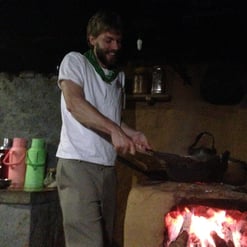 Garrett graduated from JMU, and, being a man of action, he pursued the blacksmithing trade before traveling to the Midwest as part of AmeriCorps. From there, he moved to Thailand, where he taught middle school musical composition and high school biology. His time in AmeriCorps provided enriching cultural experiences and authentic travel opportunities, culminating in a 10-day solo trek through the Himalayas.
After living abroad, Garrett and his now-wife returned to Virginia, where he began working at the University of Richmond. During these years, he held positions managing non-profit outreach and continuing education for the university. His time at Richmond provided Garrett with a simple truth: there is no leader without a team. While concise and arguably obvious, this truth is deceptively simple. Being a leader is not about focusing on oneself; rather, it involves uplifting those around you. Being a leader means being a caretaker and providing opportunities, including the chance to fail.
Garrett finds the university space to be a unique environment for not only identifying problems but also solving them. Universities possess the rare ability to foster both research and expertise; therefore, they should not only theorize and analyze but also take action to implement solutions. This goal requires education that extends beyond four short years and is instead a lifelong endeavor. This goal of providing evolving skills to meet the ever-changing demands of the modern world drives Garrett’s work at the CIL. Impact should be real, not simply ideal.
Garrett works daily to build a center that makes the wealth of knowledge within the university available to the community it serves. This circular exchange enables the community to thrive and enhances solution-based outcomes. Just as sustainable farming depends on its community, so too does positive social change rely on institutions.